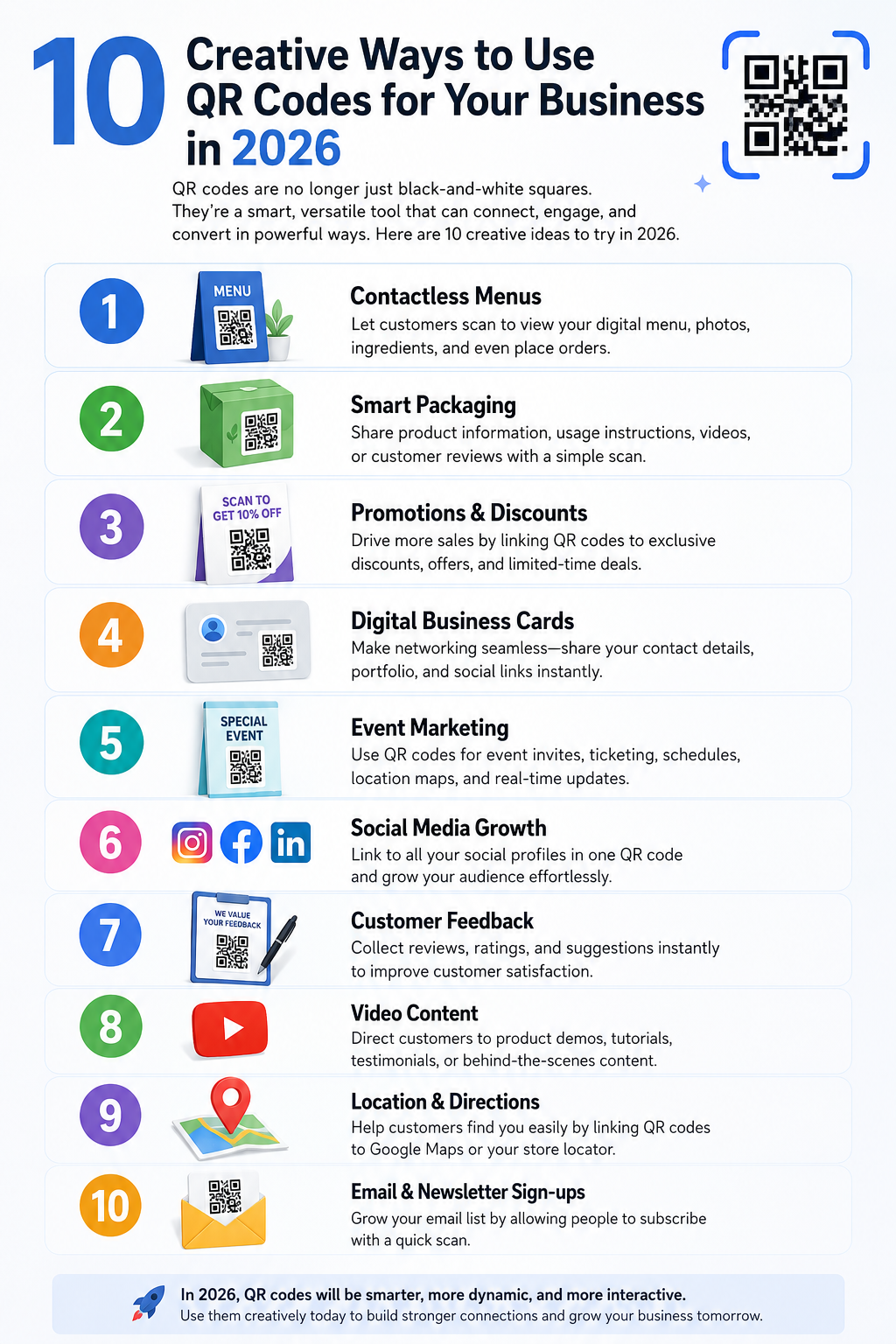
10 Creative Ways to Use QR Codes for Your Business in 2026
QR codes have evolved from simple black-and-white squares into powerful tools for marketing, customer engagement, and business growth. In 2026, businesses of all sizes—from local shops to global brands—are using QR codes to create seamless digital experiences, boost sales, and improve customer satisfaction.
If you're looking for innovative ways to use QR codes, this article explores ten practical ideas that can help your business stand out and connect with customers more effectively.
What Are QR Codes?
A QR (Quick Response) code is a two-dimensional barcode that can store various types of information, such as website URLs, contact details, payment information, Wi-Fi credentials, and more. Customers simply scan the code using their smartphone camera to instantly access the content.
Because they are easy to create, affordable, and highly versatile, QR codes have become an essential marketing tool for modern businesses.
1. Create Digital Business Cards
Instead of handing out traditional paper business cards, use a QR code that links to your digital contact card. When someone scans it, they can instantly save your phone number, email address, website, and social media profiles.
Benefits:
- Easy to update contact information
- Environmentally friendly
- Professional appearance
2. Accept Contactless Payments
Many businesses now display QR codes at checkout counters to accept mobile payments. Customers simply scan the code using their preferred banking or digital wallet app to complete the transaction.
Benefits:
- Faster payments
- Reduced cash handling
- Improved customer convenience
3. Share Product Information
Place QR codes on product packaging to provide customers with additional information such as:
- User manuals
- Product specifications
- Installation guides
- Warranty details
- Instructional videos
This reduces printing costs while giving customers instant access to valuable resources.
4. Collect Customer Feedback
Customer feedback helps businesses improve their products and services. Instead of asking customers to search for a survey online, place a QR code on receipts, packaging, or tables that links directly to a feedback form.
Benefits:
- Higher response rates
- Faster feedback collection
- Better customer insights
5. Promote Special Offers
Use QR codes on posters, flyers, or advertisements to direct customers to exclusive discounts, coupons, or limited-time promotions.
Examples include:
- 20% discount coupons
- Buy One, Get One Free offers
- Seasonal sales
- Loyalty rewards
This encourages more customer engagement and increases conversions.
6. Connect Customers to Social Media
Grow your online presence by linking QR codes directly to your social media profiles.
Customers can instantly follow your business on platforms like:
- TikTok
- YouTube
This makes it easier to build a loyal online community.
7. Provide Digital Menus
Restaurants and cafés widely use QR codes for digital menus. Customers simply scan the code to browse the latest menu, prices, and special offers without touching printed menus.
Advantages include:
- Easy menu updates
- Lower printing costs
- Better hygiene
- Faster ordering
8. Simplify Event Registration
QR codes are perfect for conferences, workshops, concerts, and exhibitions.
Businesses can use them to:
- Register attendees
- Sell tickets
- Share event schedules
- Check guests in quickly
This improves the overall event experience while reducing waiting times.
9. Improve Customer Support
Instead of printing lengthy support instructions, businesses can place QR codes on products that link directly to:
- FAQs
- Video tutorials
- Live chat support
- Troubleshooting guides
- Customer service contact pages
Customers receive instant assistance whenever they need it.
10. Track Marketing Campaign Performance
Dynamic QR codes allow businesses to monitor:
- Number of scans
- Time of scans
- Device types
- Geographic locations
- Campaign performance
These insights help marketers understand customer behavior and optimize future campaigns for better results.
Best Practices for Using QR Codes
To maximize the effectiveness of your QR codes:
- Use high-resolution images.
- Maintain strong color contrast.
- Test the QR code before publishing.
- Add a clear call-to-action like "Scan to Learn More" or "Scan for 20% Off."
- Ensure the linked content is mobile-friendly.
- Place QR codes where they are easy to notice and scan.
Common Mistakes to Avoid
Avoid these common errors when using QR codes:
- Linking to broken or outdated webpages
- Making the QR code too small
- Using poor color contrast
- Placing QR codes in hard-to-reach locations
- Forgetting to test the code before printing
The Future of QR Codes
As technology continues to advance, QR codes are expected to play an even bigger role in digital marketing, smart packaging, healthcare, education, logistics, and retail. Businesses are increasingly integrating QR codes with personalized marketing, loyalty programs, augmented reality (AR), and contactless services to deliver richer customer experiences.
Conclusion
QR codes are more than just a convenient way to share links—they are a powerful business tool that can improve customer engagement, streamline operations, and drive sales. Whether you're running a small local shop or a large enterprise, integrating QR codes into your marketing strategy can help you stay competitive in today's digital landscape.
By using the creative ideas and best practices outlined in this article, your business can unlock the full potential of QR codes and provide customers with faster, smarter, and more engaging experiences.