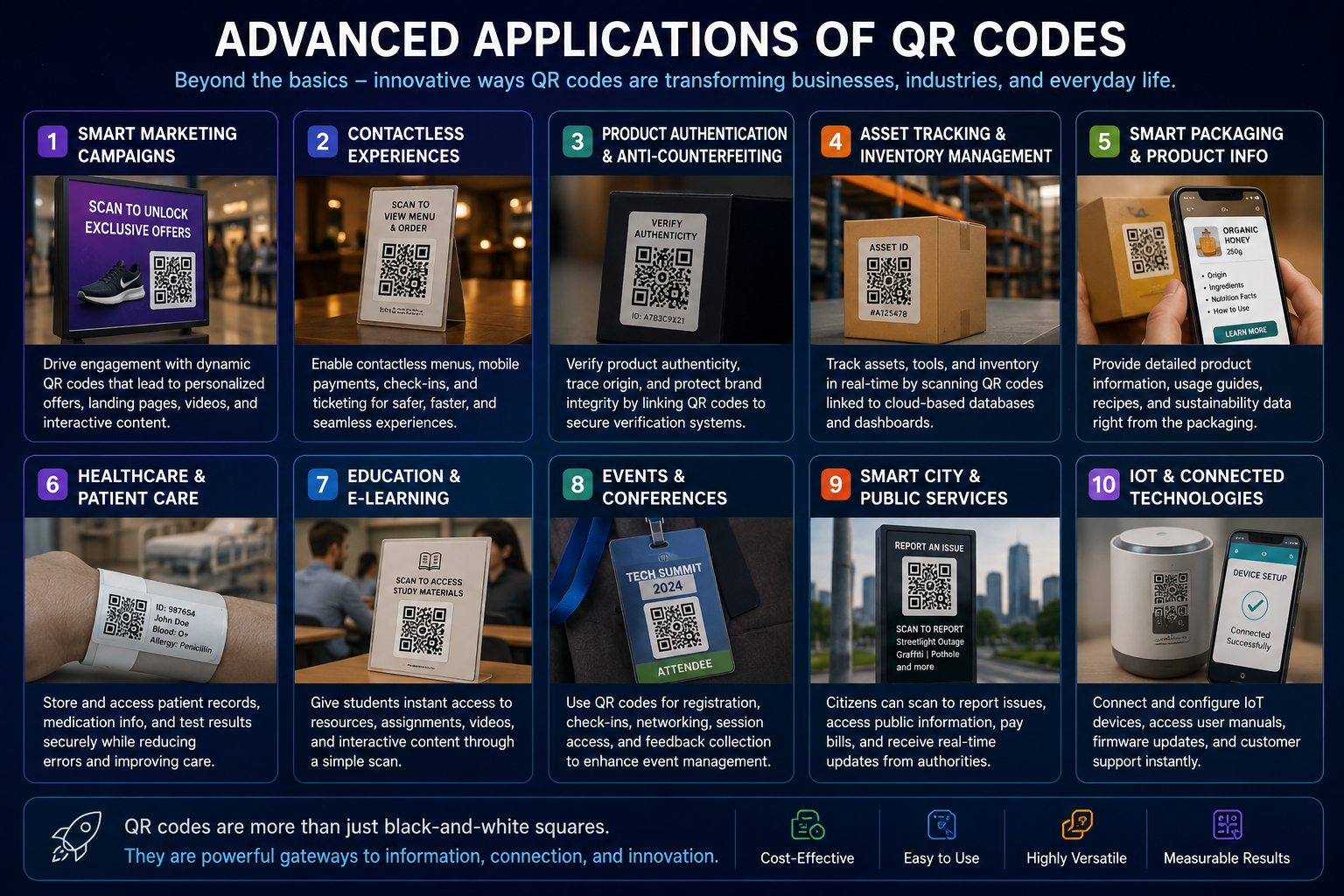
Advanced Applications of QR Codes
As technology continues to evolve, QR Codes are being used in more creative and innovative ways. Businesses, educational institutions, healthcare providers, and governments have adopted QR Codes to simplify communication and improve user experiences.
QR Codes in Retail
Retail stores use QR Codes to provide customers with instant access to product information. Instead of printing lengthy descriptions on product packaging, companies place a QR Code that links to detailed specifications, user manuals, warranty information, and customer reviews.
Retailers also use QR Codes to:
- Offer exclusive discounts
- Share promotional campaigns
- Provide loyalty rewards
- Enable contactless payments
- Collect customer feedback
This improves customer satisfaction while reducing printing costs.
QR Codes in Healthcare
Hospitals and clinics increasingly rely on QR Codes for patient care and administration.
Healthcare organizations use QR Codes to:
- Access patient records securely
- Schedule appointments
- Share prescriptions
- Provide vaccination certificates
- Offer health education materials
- Track medical equipment
These applications help improve efficiency while reducing paperwork.
QR Codes in Education
Educational institutions use QR Codes to make learning more interactive.
Teachers can place QR Codes in textbooks, presentations, and classroom materials that lead students to:
- Video tutorials
- Online quizzes
- Homework assignments
- Digital libraries
- Research articles
- Interactive learning resources
Students can access information instantly using their smartphones.
QR Codes in Tourism
Tourist attractions often display QR Codes near monuments, museums, and historical landmarks.
Visitors can scan them to:
- Learn historical facts
- Listen to audio guides
- Watch educational videos
- View maps
- Book tickets
- Explore nearby attractions
This creates a richer and more engaging travel experience.
QR Codes for Business Growth
Businesses of all sizes can benefit from QR Codes. They help bridge the gap between offline marketing and digital platforms.
Some common business uses include:
- Business cards
- Product packaging
- Store windows
- Event banners
- Brochures
- Magazines
- Advertisements
A single scan can direct customers to a website, online store, or social media page.
Dynamic vs. Static QR Codes
Choosing the right type of QR Code depends on your needs.
Static QR Codes
- Free to create
- Permanent data
- Best for simple information
- Cannot be edited later
- No scan tracking
Dynamic QR Codes
- Editable after creation
- Track scan statistics
- Suitable for marketing campaigns
- Better for businesses
- Support analytics and performance monitoring
If you plan to update information regularly, Dynamic QR Codes are usually the better choice.
Best Practices for Creating QR Codes
To ensure the best user experience, follow these recommendations:
Use High Contrast
Black QR Codes on a white background are the easiest to scan.
Maintain the Quiet Zone
Leave sufficient white space around the QR Code so scanners can recognize it.
Choose the Right Size
Small QR Codes may be difficult to scan, especially when printed on posters or banners.
Test Before Publishing
Always scan your QR Code with multiple devices before printing or sharing it.
Add a Call to Action
Tell users what they will get after scanning.
Examples include:
- Scan to Visit Our Website
- Scan for a Discount
- Scan to Download the App
- Scan to View the Menu
A clear call to action increases scan rates.
Are QR Codes Safe?
QR Codes themselves are not dangerous, but the links they contain can sometimes lead to unsafe websites if created by malicious users.
To stay safe:
- Scan QR Codes only from trusted sources.
- Check the preview link before opening it.
- Avoid entering sensitive information on unknown websites.
- Keep your smartphone updated with the latest security software.
Businesses should use secure (HTTPS) websites when linking QR Codes to online content.
Common Mistakes to Avoid
Many users create QR Codes without considering usability.
Avoid these common mistakes:
- Using very small QR Codes
- Printing blurry images
- Linking to broken pages
- Placing QR Codes where they are hard to scan
- Using poor color combinations
- Forgetting to test before publishing
Following best practices ensures a smooth scanning experience.
The Future of QR Codes
QR Codes continue to grow in popularity as smartphones become more powerful and internet access becomes more widespread.
In the future, QR Codes are expected to play an even bigger role in:
- Smart cities
- Digital identity systems
- Contactless payments
- Public transportation
- Healthcare services
- Event management
- E-commerce
- Augmented Reality (AR)
As technology advances, QR Codes will remain a simple, fast, and reliable way to connect people with digital information.
Conclusion
QR Codes have transformed the way people share and access information. From business marketing and education to healthcare and digital payments, they offer a fast, convenient, and cost-effective solution for connecting the physical and digital worlds.
Whether you are an individual, a small business owner, or a large organization, QR Codes can improve communication, increase customer engagement, and simplify everyday tasks. By following best practices and using QR Codes responsibly, you can unlock their full potential and create a better experience for your audience.