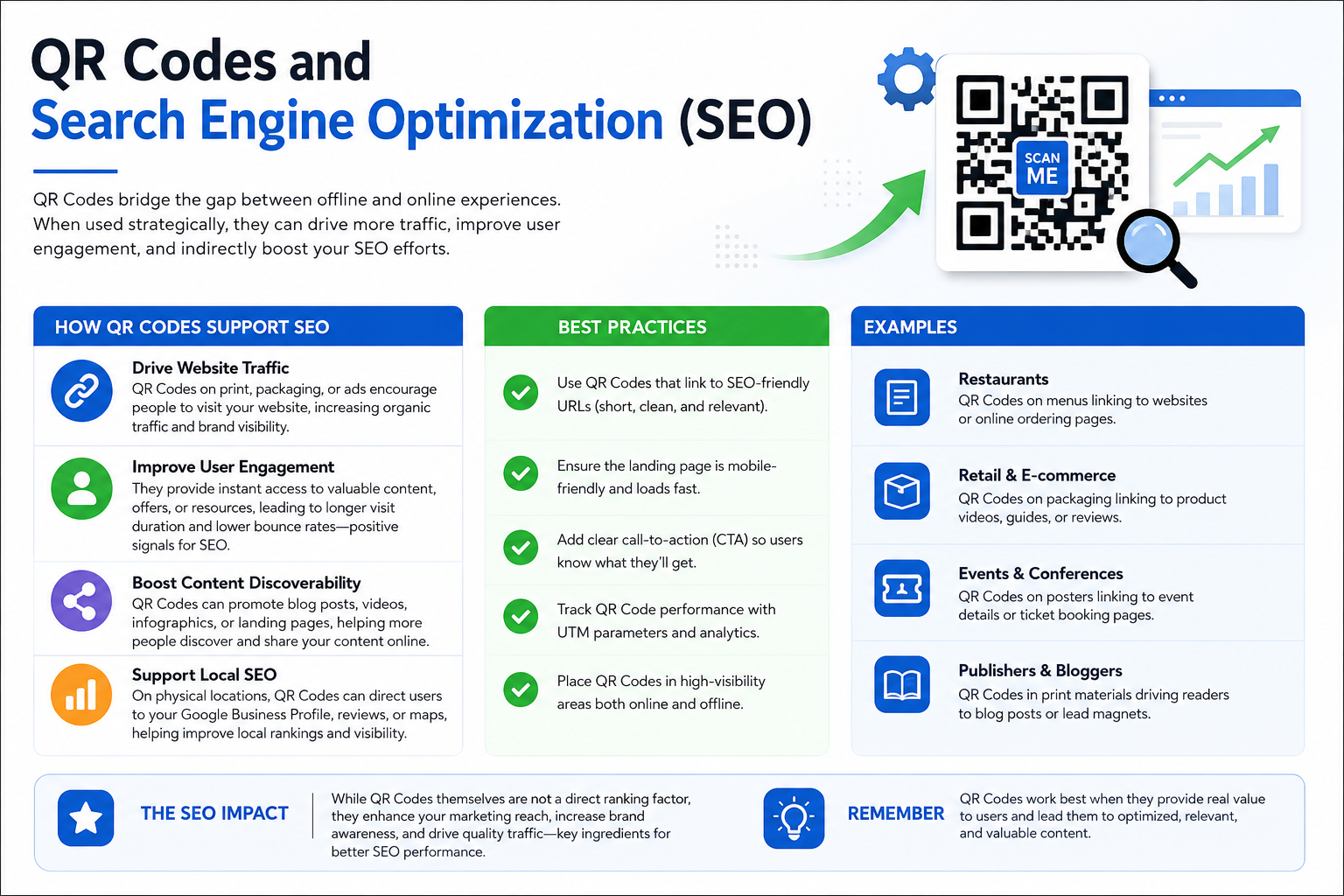
QR Codes and Search Engine Optimization (SEO)
Although QR Codes themselves do not directly improve search engine rankings, they can support a strong SEO strategy by driving more visitors to your website. When users scan a QR Code that links to a fast, mobile-friendly page, they are more likely to stay on the site, explore additional content, and complete desired actions. These positive user experiences can contribute to better engagement metrics.
Businesses often place QR Codes on product packaging, brochures, magazines, banners, and business cards. By connecting offline marketing with online content, companies can attract new visitors who may never have discovered their website through search engines alone.
To maximize SEO benefits, always link your QR Code to:
- A responsive mobile webpage
- Fast-loading content
- Secure HTTPS pages
- Relevant landing pages
- Clear calls to action
QR Codes for Social Media Growth
Social media is an important part of every modern business, and QR Codes make it easier for customers to connect with your brand.
Instead of asking users to search manually, a QR Code can instantly open your:
- Facebook page
- Instagram profile
- LinkedIn profile
- YouTube channel
- X (Twitter) account
- TikTok profile
This reduces friction and encourages more people to follow your business online.
Many companies also use QR Codes during live events, conferences, and exhibitions to increase social media engagement.
QR Codes for Product Authentication
Counterfeit products are a growing concern across many industries. QR Codes can help customers verify that a product is genuine.
Manufacturers place a unique QR Code on each product. After scanning, customers can confirm:
- Product authenticity
- Manufacturing date
- Batch number
- Warranty status
- Official product information
This builds customer trust and protects brand reputation.
QR Codes in Libraries
Libraries have also embraced QR Code technology to improve access to information.
QR Codes can help visitors:
- Access digital catalogs
- Download eBooks
- Reserve books online
- Learn about authors
- Watch educational videos
- Explore research databases
Students and researchers benefit from quick access to valuable learning resources without needing to search manually.
Tips to Increase QR Code Scan Rates
Simply creating a QR Code is not enough. Encouraging people to scan it requires thoughtful placement and clear messaging.
Here are some practical tips:
- Use a descriptive call to action such as "Scan to Learn More" or "Scan for 20% Off."
- Place the QR Code where it is easy to see.
- Make sure there is enough lighting for scanning.
- Avoid placing QR Codes on reflective or curved surfaces.
- Test the QR Code on different smartphone models.
- Keep the linked content useful and relevant.
The easier and more valuable the experience, the more likely users are to scan.
Mistakes Businesses Should Avoid
Some QR Code campaigns fail because of avoidable errors.
Common mistakes include:
- Linking to a homepage instead of a dedicated landing page.
- Printing QR Codes too small.
- Using low-resolution images.
- Failing to test the QR Code before publishing.
- Linking to pages that are no longer available.
- Ignoring mobile optimization.
- Not providing instructions for first-time users.
Avoiding these issues helps create a better user experience and improves campaign performance.
Why QR Codes Matter in the Digital Age
The digital world continues to evolve rapidly, and QR Codes have become one of the simplest ways to connect physical materials with online content. They save time, reduce manual typing, and make information instantly accessible.
Whether used for education, marketing, payments, customer service, or business operations, QR Codes provide a reliable and efficient solution that benefits both organizations and users. As smartphone adoption continues to grow worldwide, QR Codes are likely to remain an essential part of digital communication for years to come.
Expert Recommendations
If you plan to use QR Codes professionally, keep these recommendations in mind:
- Always test every QR Code before sharing it.
- Use high-quality graphics for printing.
- Link to secure and mobile-friendly websites.
- Update dynamic QR Codes regularly.
- Monitor scan analytics to measure performance.
- Provide clear instructions and a strong call to action.
- Refresh marketing campaigns with new offers and content.
Following these best practices will help you create QR Code campaigns that are effective, user-friendly, and successful over the long term.