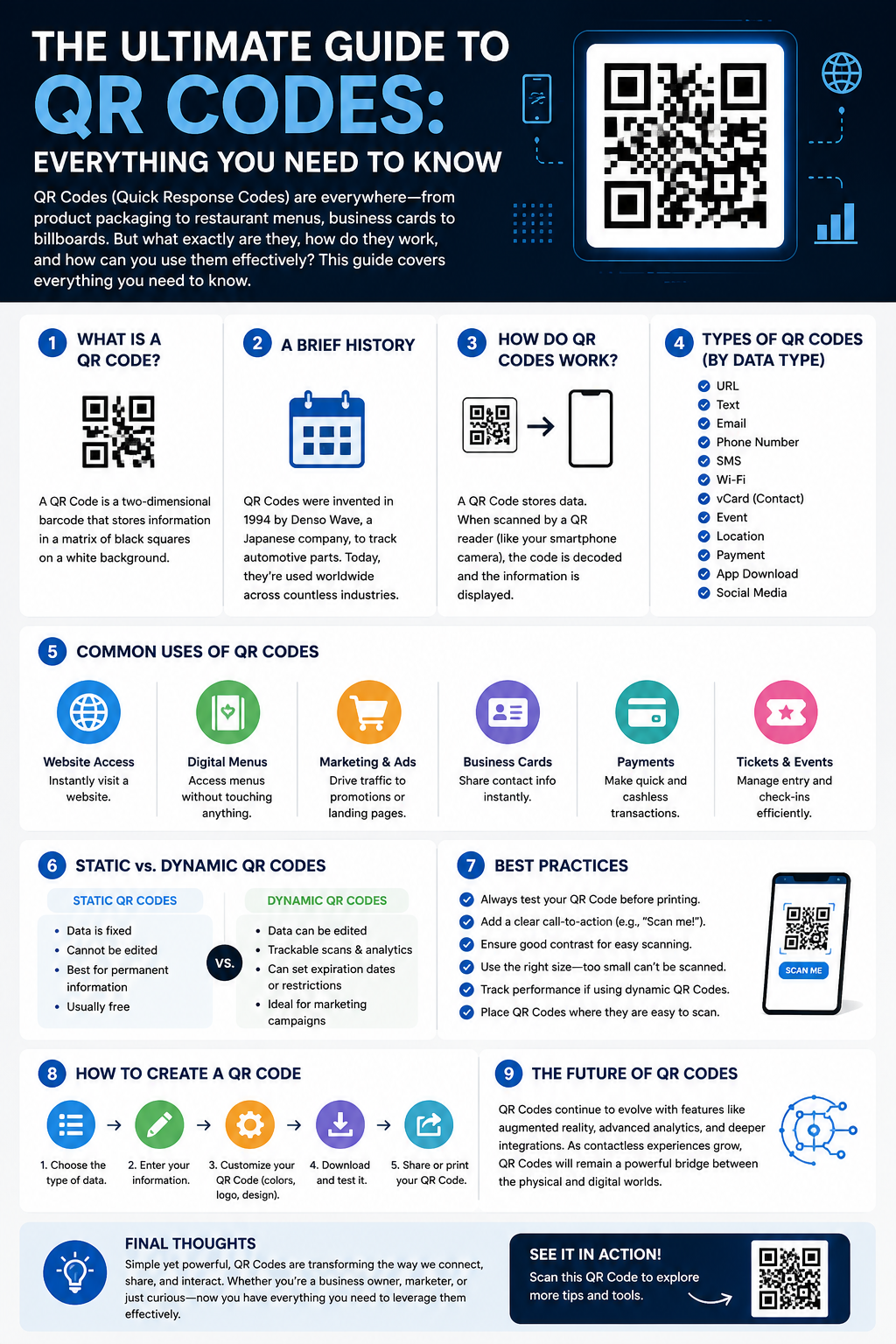
The Ultimate Guide to QR Codes: Everything You Need to Know
QR codes have become a part of everyday life, making it easier than ever to access information with a simple smartphone scan. Whether you're paying for groceries, checking a restaurant menu, downloading an app, or visiting a website, QR codes provide a fast and convenient way to connect the physical and digital worlds.
In this comprehensive guide, you'll learn what QR codes are, how they work, their different types, key benefits, practical uses, security tips, and best practices for creating effective QR codes.
What Is a QR Code?
A QR (Quick Response) code is a two-dimensional barcode made up of black squares arranged on a white background. Unlike traditional barcodes that store only a small amount of information, QR codes can hold a variety of data, including website links, contact details, payment information, Wi-Fi passwords, and more.
Originally developed in 1994 by Denso Wave in Japan for tracking automotive parts, QR codes are now widely used across industries worldwide.
How Do QR Codes Work?
QR codes work by encoding information into a unique square pattern. When scanned using a smartphone camera or QR code reader, the encoded data is instantly decoded and displayed or executed.
Depending on the type of information stored, scanning a QR code can:
- Open a website
- Save a contact
- Connect to a Wi-Fi network
- Make a payment
- Send an email
- Display text or multimedia content
This quick process eliminates the need to manually type URLs or other information.
Types of QR Codes
There are two main categories of QR codes:
Static QR Codes
Static QR codes contain fixed information that cannot be changed after creation. They are ideal for permanent content such as personal contact details or printed documents.
Advantages:
- Free to create
- Permanent
- Easy to use
Limitations:
- Cannot be edited after creation
- Do not provide scan analytics
Dynamic QR Codes
Dynamic QR codes use a short redirect URL, allowing the destination to be updated even after the QR code has been printed.
Advantages:
- Editable at any time
- Provides scan statistics
- Suitable for marketing campaigns
- Supports changing content without reprinting
Limitations:
- Usually requires a paid subscription
- Depends on a QR code management platform
Benefits of QR Codes
QR codes offer several advantages for both businesses and consumers:
- Instant access to digital content
- Contactless information sharing
- Cost-effective marketing
- Easy to generate and distribute
- Compatible with most smartphones
- Improved customer engagement
- Reduced printing costs
- Faster transactions and communication
Common Applications of QR Codes
QR codes are used in a wide variety of industries, including:
- Marketing: Direct customers to websites, product pages, or promotional offers.
- Retail: Enable mobile payments, loyalty programs, and product information.
- Education: Share assignments, online resources, and learning materials.
- Healthcare: Improve patient identification and appointment management.
- Hospitality: Provide digital menus, hotel information, and contactless services.
- Events: Simplify ticketing, registrations, and attendee check-ins.
Best Practices for Creating QR Codes
To maximize usability and scan success:
- Use high-resolution images.
- Maintain strong contrast between the code and background.
- Include sufficient white space (quiet zone).
- Avoid making the QR code too small.
- Test it on multiple devices before publishing.
- Place it where users can easily scan it.
- Add a clear call-to-action, such as "Scan to Learn More" or "Scan to Get Started."
QR Code Security Tips
Although QR codes are generally safe, users should follow these precautions:
- Scan codes only from trusted sources.
- Verify website URLs before entering personal information.
- Avoid scanning damaged or suspicious QR codes.
- Keep your smartphone's operating system updated.
- Use reliable security software when appropriate.
Businesses should regularly inspect physical QR codes to ensure they have not been replaced or tampered with.
The Future of QR Codes
As digital technology continues to evolve, QR codes are becoming even more versatile. Emerging applications include smart packaging, augmented reality experiences, digital identity verification, IoT connectivity, and advanced contactless payment systems.
With increasing smartphone adoption and digital transformation across industries, QR codes are expected to play an even greater role in everyday interactions.
Conclusion
QR codes have revolutionized the way people share information and interact with digital services. Their simplicity, versatility, and convenience make them an essential tool for businesses, educators, healthcare providers, and consumers alike. By understanding how QR codes work and following best practices, you can leverage this powerful technology to improve communication, streamline processes, and enhance user experiences.